Wayne County Trail Towns
On The Road Through History
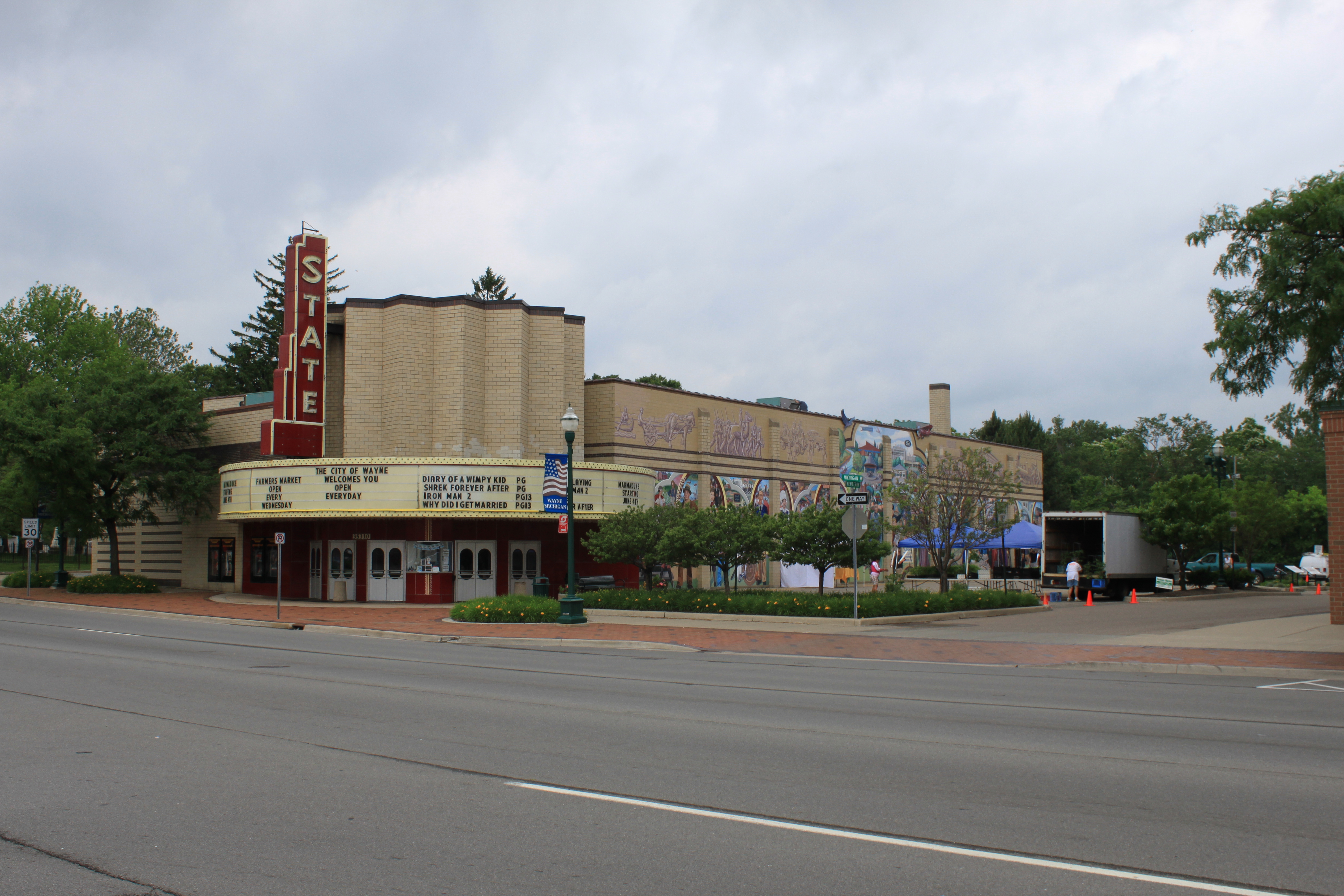
The history of Wayne has been defined by its strategic location on the Rouge River and its proximity to Detroit, serving as a vital transportation hub for over 175 years. Long before European settlement, the area was a key trading route for the Pottawatomi Tribe, whose artifacts are still discovered along the riverbanks. The city’s evolution has mirrored the progress of American travel, moving from the era of stagecoaches to the birth of the automobile. This legacy is celebrated annually during the “Wheelfest” and is immortalized in a massive historical mural on the exterior of the State Wayne Theater.
Originally known as Derby’s Corners after its first settler, Ezra Derby, the settlement took on a new identity in 1836. Property owners Rufus Grown and Colonel Joshua Howard renamed the town in honor of General “Mad” Anthony Wayne. Howard, who served under the General and later commanded the Federal Arsenal in Dearborn, chose the name to commemorate Wayne’s reputation for leading “ferocious” fighters. The village was formally incorporated on April 12, 1869, eventually growing into a bustling community centered along Michigan Avenue.
Today, downtown Wayne maintains a classic “hometown” atmosphere with a variety of local shops and restaurants. Two major landmarks anchor the city’s cultural scene: the Wayne Historical Museum and the State Wayne Theater. The museum is housed in a structure built in 1878 and features over 100 exhibits detailing life in the era of wood-burning stoves and horse-drawn buggies. Nearby, the State Wayne Theater stands as a community icon, featuring a beautifully preserved original Art Deco marquee. Since its municipal renovation in 1991, the building has served as both a modern multiplex and a venue for live community theater productions.